Archive for the 'Professional Development' Category

01.30.2008
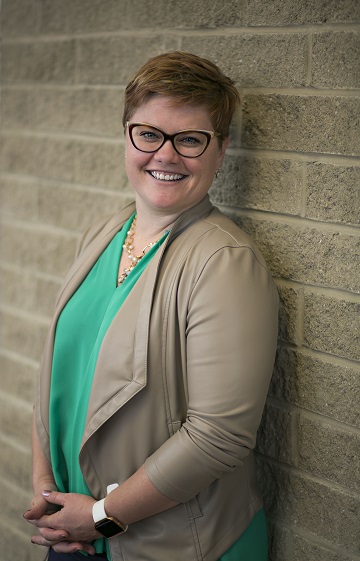
ClaireMeyerhoff.jpg
Claire Meyerhoff

Last month, Claire Meyerhoff called to interview me about nonprofit storytelling for some articles she is working on, and we ended up having an hour-and-a-half chat about how hard it is for so many nonprofits to get press coverage, even though they have such great stories to tell.

We shared all kinds of theories about why this is true, and one of Claire’s points was really on target: Nonprofits need to cut the bull! Blathering on about your wonky mission statement, the infinitely deep root causes of a problem, and the complicated system-wide solutions required just doesn’t work for print reporters who need to think in terms of hundreds of words, not thousands, and TV journalists who can give you only 30 seconds of airtime.

I was so impressed with Claire’s down-to-earth perspective that I asked if she’d be interested in doing a teleseminar with me. Then she told me a bit more about her history and I couldn’t wait to host this event.

If you can spare $20 for some great media training, here’s where you should spend it:

Getting Reporters to Cover Your Nonprofit: How to Tell Your Story So They’ll Tell It Too!

It’s next week’s Nonprofit Marketing Guide teleseminar (in other words, it’s a toll-free conference call) on Wednesday, February 6, 2008 at 2:00 p.m. Eastern (11:00 a.m. Pacific). Gather ’round the speaker phone — as long as you are all from the same organization, $20 buys training for your whole staff.

Here’s what you should know about Claire, and why I was so eager to introduce her to all of you. Claire is a communications professional who has spent twenty-something years spreading the word with no muss and no fuss. As a news writer in CNN’s Washington bureau, she took complex stories and honed them into :30 worth of copy fit for Judy Woodruff and Wolf Blitzer. She also helped the National Safe Kids Campaign make the CBS Evening News — and I’ll have her share the story about why that wouldn’t have happened if she had done what the “higher ups” wanted her to do.

She has also reported on Hurricane Katrina’s aftermath on XM Radio’s “Red Cross Radio” channel, and she wrote and narrated an award-wining video for Ronald McDonald House of Durham, NC. Simply put, Claire gets nonprofits and on Wednesday, she’ll help you get the media.

I’m calling this a “Hot Seat” interview, which means I’ll spend the first 15-20 minutes of the hour-long call peppering Claire with some good, tough questions. Then it’s your turn. You can submit questions in advance and during the teleseminar via email to ask AT hotseatquestions.com or send them in via AIM to hotseatquestions.

Get the details and register for the teleseminar now.

This week’s webinar at Nonprofit Marketing Guide.com is “Ten Easy Fixes for Your Boring Print Newsletter.” It’s on Wednesday, January 23, 2008 from 2:00 - 3:00 p.m. Eastern (11:00 a.m. Pacific). Registration is $49.

Not sure if you should take this webinar or not? See if your print newsletter is showing any of these signs of being really boring:

1) The “Letter from the Executive Director” is on the cover or takes up a whole page. This is a tell-tale sign that your newsletter is more about what you think is interesting than what your audience cares about, which is the number one reason that nonprofit newsletters are boring. Even if it is not on the cover, if your executive message fills a whole page anywhere in your newsletter, odds are it’s boring.

2) You’re talking about stuff that happened months ago. Don’t summarize an event that happened three months ago in your newsletter. That tells me that you don’t have enough good stuff going on now and in the future to fill your pages. I’m not against event summaries in newsletters, but make sure they are very recent or that you’ve turned them into some other useful form of information, like a how-to article. Otherwise it’s just boring old news.

3) The photos are all grip-and-grins and fig-leaf lineups. Yes, we want people photos, but the same ol’ award ceremony and big check photos are uninspiring and have nothing to do with your mission. Same goes for the fig-leaf lineups (you know, where everyone is standing with their hands crossed in front of their privates). More on bad photo poses.

4) The word “You” is rarely used. People want to read information that is relevant to them and the word “You” in headlines, subheads, and first sentences of paragraphs signals that the writer is talking directly to the reader. If you aren’t talking to me, the reader, why should I care what you have to say? In other words, talk to me directly, or I’m bored.

5) You’ve reduced the type size to make everything fit. This usually means that you either don’t want to edit what you’ve written or don’t know how, and either way, unedited, rambling text with too many tangential details is really boring.

If you see your newsletter here, register for the webinar on Wednesday. One of my freelancing friends from my days in Washington DC, Ruth Thaler-Carter, will join me in answering your questions. Ruth is a veteran nonprofit newsletter writer, editor and designer and will have lots of great tips to share with us.

Using stories in your nonprofit annual report is a great way to bring to life what might otherwise be some stiff writing on your activities and accomplishments. But simply throwing some stories into the text won’t do. You need to be very focused and highly selective about which stories you use and how you tell them in your annual report. Here are my top five tips for using stories in annual reports. For more advice on annual reports, register for my webinar on Thursday, “Writing Your 2007 Nonprofit Annual Report - A Crash Course.

Make the Story Immediately Relevant. A touching story about a little girl’s struggle to overcome a rare disease is heart-warming, but it’s nothing more than that if I don’t understand how this child is connected to your organization and specifically to the accomplishments. I’m reading your annual report to understand what you achieved last year. That little girl’s story needs to help me understand what your organization did. Ideally by the end of the first paragraph, and definitely by the end of the second, make it clear to me the role your organization played in helping this child. It’s what journalists call the “nut graph.”

Put Stories in Context. Stories about a single person are great for many reasons, but we also need to understand the larger context. How many other children have been helped by your support program, beyond the one you are telling us about in detail?

Cut the Fluffy Details. If you spend an hour interviewing someone, it can be really tough to hone in on which details matter most. But you need to include only the details that support why you are telling this particular story in the first place. We do not need a life history. We don’t need to know about all the other players in the story. Look at every detail and quote you provide and ask yourself if it reinforces or detracts from that nut graph.

Keep It Short. Let’s face it — people are more likely to skim your report than to read it, which means short, tight writing is much better than long essays. It’s also very unlikely that each story you tell is going to connect with all of your readers in the same way. That’s why I would rather spend 200 words on one person, 200 on another, and 100 words pulling it all together in a 500-word section than spending the whole 500 words talking about one person.

Let the Subject Approve the Copy. You are telling someone’s personal story as a way to promote your organization’s accomplishments. There’s nothing wrong with that, as long as the person agrees that you played the role you say you did. By allowing the story’s subject to approve the final copy, you ensure that both your organization and the individual will stand behind the claims you are making about your successes.

I’ll keep my eyes open for good storytelling in annual reports and let you know when I see some strong examples. If you find some, please share by leaving a comment on this post.

01.14.2008

I came across this interesting article in the Washington Post (”Hey, Isn’t That. . .“) on how big corporations are poaching photos off of Flickr and private blogs and using them without attribution. When caught, the common reaction seems to be, “Ooops, an intern did it.” Not really an acceptable answer from the likes of the multinational corporations involved in the cases cited in the article, is it?

It reminded me of the similar excuses several nonprofit bloggers heard last fall when a bunch of us were hit with a spate of poached blog postings all around the same time. I wrote about fair use of blog posts and Nancy Schwartz also shared her story about a stolen article. In both of our cases, the perps attributed the problems to mistakes by “junior” staff.

When you hand off tasks like newsletter writing and finding photos for your publications to junior staff or interns, be sure to take five minutes to talk about copyright and proper attribution. Spend a few minutes at Creative Commons. This is definitely a case where a few minutes of prevention can save you hours of grief. Not only will you avoid the embarrassment associated with being publicly called out as a content thief, you’ll also save hours of time defending and/or apologizing for the behavior (and in the case of the corporations in the Post story, lots of legal fees.)

Starting next week, I will be offering a weekly webinar/teleseminar series on nonprofit marketing and communications topics. Webinars will have both audio and visuals, teleseminars with have audio only, and e-clinics will include personal coaching.

Here are the first seven events, with much more to come:

Writing Your 2007 Nonprofit Annual Report: A Crash Course Webinar, 1/17/08 ($49)

Ten Easy Fixes for Your Boring Print Newsletter - A Webinar, 1/23/08 ($49)

How to Make Your Nonprofit Brochures Pop - The Crash Course Webinar, 1/29/08 ($49)

How to Make Your Nonprofit Brochures Pop - The Webinar and E-Clinic Combo, 1/29 & 1/31/08 ($139)

Getting Reporters to Cover Your Nonprofit: How to Tell Your Story, So They’ll Tell It Too! - A Teleseminar, 2/6/08 ($20)

What Should We Write About? Storytelling Ideas for Nonprofits - A Webinar, 2/13/08 ($49)

Online Writing: Dos and Don’ts of Writing for the Web and Email - A Webinar, 2/20/08 ($49)

I’m lining up several great speakers for additional events in March and April, along with developing some new courses of my own. Subscribe to this blog (upper left of blog homepage) or to my monthly Nonprofit Marketing Tips e-newsletter (middle left of site homepage) to keep up-to-date with the schedule, special offers, and more.

Online Writing WebinarDo you know the important differences between how people read on paper and how they read on a computer screen? Do you understand how those differences drastically change the way you should write for your website visitors and email newsletter readers?

If you aren’t sure, I’ll show you how to go from confused to confident in under an hour. Register for my next live webinar happening Thursday, December 13, at 2:00 p.m. ET. (That’s 1:00 - 2:00 p.m. CT, Noon - 1:00 p.m. MT, and 11:00 a.m. - Noon PT).

From the comfort of your own desk, you’ll learn the important differences between reading and writing on paper and online, how to make your writing more appealing to online readers, and simple word choice and formatting tricks that can drastically improve your website’s or email’s performance.

You’ll also learn ways to organize your thoughts and ideas to match the way people use the Web and how to convert your existing print publications for use online.

If you want your website visitors and e-newsletter subscribers to actually read what you write, instead of quickly navigating away from your web pages or deleting your email, you have to learn to write in a whole new way. This webinar will show you how.

Registration costs just $49. When you consider how much time you spend on your website and e-newsletter, that’s a tiny investment to make sure your messages get across. During the webinar, you’ll have the chance to ask questions over the phone or via chat, using a toll-free, user-friendly webinar service.

Get the details and register today!

10.25.2007

I’m blogging today and tomorrow from the North Carolina Center for Nonprofits Annual Conference in Winston-Salem. This morning, I attended a great session called “Building and Sustaining Your Individual Donor Base through Effective Stewardship.” The two speakers were Amanda Osborne, Director of Development for Fellowship Hall, Inc., an alcohol and drug treatment program, and Peggy Carter, Vice President of the Forsyth Medical Center Foundation.

The pair did a solid job of synthesizing and sharing some of the key points in the leading fundraising how-to books, sprinkling in examples and anecdotes from their own work. Their main point was that you have to know each and every donor individually to be an effective steward of their participation with your nonprofit. They offered different methodologies for categorizing donors based on why they give and on how they want to be thanked.

Amanda discussed the Seven Faces of Philanthropy and suggested that nonprofits try to recognize the different categories in their donor lists. Here’s a brief run-down of the categories, if you aren’t familiar with them.

Communitarians–They give because they consider nonprofits effective and they have strong ties to their community and local history. They represent 26% of donors, and tend to give to cultural and human service groups.

Devouts–About 21% of givers, they believe everyone has a responsibility to give and that it is God’s will. They are not interested in public recognition.

Investors–This 15% of donors gives in the same way that they invest–very business-like, want to solve problems and see results.

Socialites–They are interested in giving as entertainment, socializing as philanthropy, and like special events. They represent 10% of donors.

Repayers–They do good in return for what they have received and feel a personal responsibility to give back. They represent 10% of donors and typically focus on client needs, because they were likely once the clients themselves.

Altruists–They look for causes that offer a sense of personal fulfillment for them. Giving is the right thing to do for their own spiritual growth.

Dynasts–Giving is what their families have always done; it’s part of their socialization and their identities are often tied to giving.

Personalize and tailor your communications with your donors as much as you can. The same event invitations, newsletters, etc. are not going to appeal to all of your donors in the same way, or at all.

Donors also want to be thanked in different ways, and the only way you are going to know why way is right is to have that conversation with them. Do they want the plaque? Their name on a sponsor list? Ask and find out. Listen.

Amanda also reviewed some key points from Donor-Centered Fundraising. The majority of donors say they’d give again if after the first gift, they received three things: (1) prompt meaningful acknowledgement, warm and personalized (2) reassurance that their gift will be used as they intended and (3) meaningful results about the program they funded.

Forget the token thank you gifts (lapel pins, mouse pads). Gifts closer to your mission (artwork by clients, free tickets to performances, etc.) can work. But what people really want is a personal thank you. More than 80% of donors said that if a board member called and said thanks that they would give again.

Peggy talked mostly about the art and science of saying thank you to donors. She emphasized the need to say thank you with the same high-quality attention that you used to ask for the gift. She suggested that by making thank-yous a highly personal part of your work, you give your organization a personality that will bring donors back. Just as we relate differently to each of our friends and family members based on who they are as individuals, nonprofits should relate to donors in the same individual ways.

She then shared the guidelines for thank yous from Developing Major Gifts.

1. Gifts must be recognized by letter AND call
2. The gift size guides the type of thank you
3. The size of the gift guides who makes the thank you
4. Each thank you must be tailored to the donor
5. Use donor information to make thank yous as personal of possible
6. Donor wishes on how to be thanked must be honored
7. The more creative the thank you, the more appreciative the donor will be.

Some people want as much publicity about their gifts as you can muster. Others would be horrified by a press release. Ask, ask, ask! You can get really creative and come up with meaningful thank yous that may seem simple to you, but really impress the donor. For example, sending photos is an inexpensive but personal way to show donors the impact they are having. Even the smallest organizations can manage to send personalized updates with photos to their major donors a few times a year. Schedule a day where that’s all you do, and do it!

08.15.2007

I’ve just released my new e-book, “How to Write a Nonprofit Annual Report” and am offering you, my blog readers, a $5 off coupon, if you download the e-book by August 31, 2007. Here is the coupon code you’ll need: 329855

The e-book is compilation of practically everything I have written to date on nonprofit annual reports. It’s a clear, practical, and easy-to-follow guide that will help you produce the best annual report possible for your nonprofit.

It will answer all of these questions for you, and more:

  • Do we really need an annual report?
  • What are the basic steps in creating an annual report?
  • Who in the office should write it?
  • How do I write each section?
  • What should it look like?
  • How long should it be?
  • What kinds of photo and graphics should we use?
  • When should we release the report?
  • Is it OK to do an annual report every other year?
  • Who should get a copy?
  • Should we put it on our website and how?
  • Does the report need to be fancy and printed in full color?
  • How do we talk about bad news?
  • How do we know if our annual report worked for us?
  • What can we do now to prepare for next year’s annual report?
  • What are the most common mistakes nonprofits make with their annual reports?
  • It’s $29.99 ($24.99 with the coupon) and available for immediate download at www.NonprofitAnnualReports.net. Here’s the coupon code again –329855 — which you’ll need when you get to the checkout page.

    P.S. Want some additional hand-holding as you create your annual report? Sign up for my annual report e-course and you’ll get a copy of the e-book, a workbook, access to a private bulletin board, and my feedback on your questions and ideas.


    View Kivi Leroux Miller's profile on LinkedIn

    Kivi Leroux Miller's Facebook profile

    Follow Kivi on Twitter


    Nonprofit Marketing Guide Learning Center


    Featured in Alltop

    Add to Technorati Favorites


    Current Poll

      Who does your nonprofit's marketing and communications?

      • Add an Answer
      View Results

    Want to Reprint a Post?

      You may reprint post headlines and excerpts as long as you link back to the post's permalink. To reprint an entire post, please contact me for permission.

    Link Disclosure

      I occasionally recommend products or services using affiliate links. This usually means that I get a very small commission when one of my readers ends up buying that product or service. Rest assured that I only recommend products when I have personally used them or when I have a high degree of confidence in the proprietor. If you have a bad experience with a product or service I recommended, please let me know so I can reconsider it.

    Blog Admin