

You may be hearing the phrase “zero-click content” more often lately. (I am doing a whole BRADN NEW webinar on it soon!) Zero-click content refers to situations where people get the information they need without ever clicking through to a website. Instead of sending traffic to you, platforms are increasingly keeping users right where they are.
For nonprofit communicators (and marketers in all industries, really), this creates a real challenge. Your website is where people can donate, sign up, volunteer, register for events, and learn more about your work. But the platforms many nonprofits rely on for visibility — social media and search — are making it harder to actually drive people there.
Not sure what I mean?
Facebook Is Discouraging Links in Posts
I have been mentioning in my Social Media Trends webinars for YEARS that Facebook posts with links get less reach. Facebook’s own data backs this up.
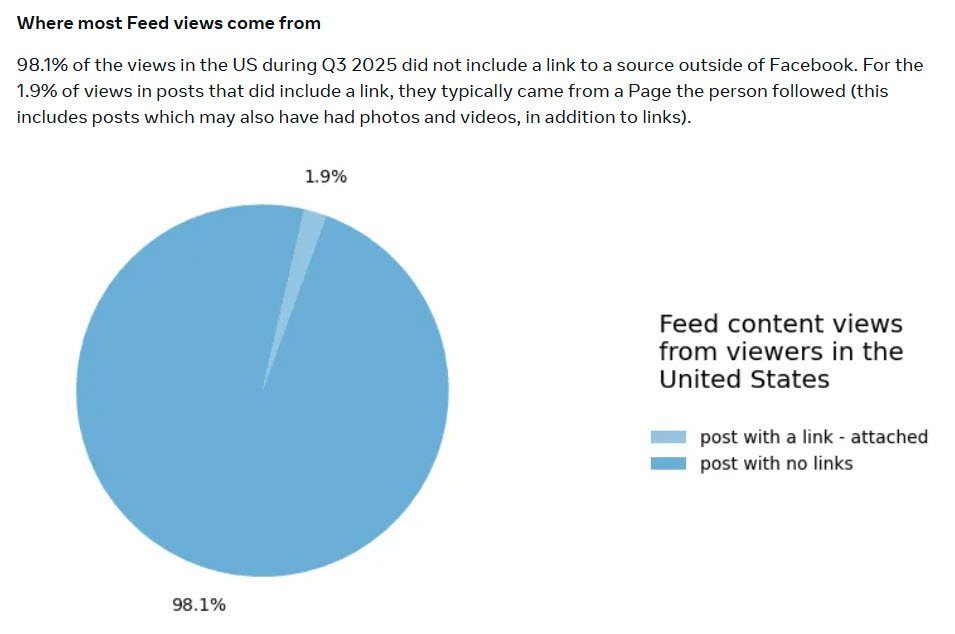
In the webinars, I always suggest a simple workaround: put the link in the comments instead of the caption. It turns out that advice is right! According to a recent article from Social Media Today, Facebook itself now suggests that adding links in the comments may help posts perform better than including them directly in the caption.
Facebook’s goal is to keep people on their platform. The more people on the platform, the more opportunity for that ad money so, of course, they are suppressing posts with links. It makes sense from their point of view. But that means fewer opportunities for someone to click through to your site.
Google Is Answering Questions Without Sending Traffic
Search is changing, too. Google’s AI Overviews now summarize answers directly in search results. That means people can get the information they need without ever clicking a link.
New data shared by Hire a Writer found that when AI Overviews appear, click-through rates can drop significantly sometimes by more than 30%. People simply read the answer and move on.
For organizations that rely on search traffic to bring people to their websites, that shift is significant.
What This Means for Nonprofit Communicators
None of this means your website no longer matters. It absolutely does. But it does mean the rules around how people discover and reach your content are changing.
You need to think differently about how platforms work, what they reward, and how to balance visibility on those platforms with getting people to take action on your own site.
Here are a few ways to handle these changes:
-
Shift expectations for what different channels are meant to do. Not every post, email, or search result has to drive a click. Treat each platform as its own micro-channel with a specific goal.
-
Create posts that deliver value even without a click. If people aren’t going to click, give them just enough value in the post itself while hinting there’s more if they do click over.
-
Publish more native content on social platforms. Social and search platforms want to keep people on their turf. So play along.
-
Rely more heavily on email to drive website traffic. Your email list is still your most direct, reliable traffic source (although we are also seeing email summaries in some inboxes similar to AI overview). But with email, these folks want to hear from you so make it count.
-
Pay closer attention to which channels still generate meaningful clicks. Look at what’s still driving traffic for you. What types of posts or emails are working? Lean into those.
In this new zero-click world, visibility still matters. Your job is to make every click you do get really count. Be generous with your content on third-party platforms, but make your website the place where the full story lives.
For more on how to navigate this huge shift, join me for a BRAND NEW 60-minute webinar, Zero-Click Content: How Nonprofits Can Master the New Rules of Online Engagement