
 |
Your nonprofit does amazing work everyday. Unfortunately, you sometimes get so wrapped up in your work that you forget how to talk about it in ways that everyone else can understand! Sound familiar?
Here are 10 signs that your writing may have tipped over to the dark side.
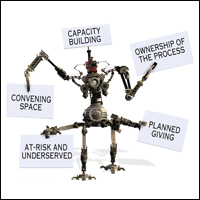
1. You are cutting and pasting grant application text into your newsletters. This means you are probably using lots of lingo and jargon that people who work in your field get, but the rest of us won’t.
2. You can play Nonprofit Buzzword Bingo with yourself. If you can score a Bingo (or close) by using the words in your newsletter article or on one page of your website, editing that text should shoot to the top of your to-do list.
3. You find yourself skimming your own writing. If you don’t have the patience to actually read what you wrote, what makes you think the rest of us will?
4. Your boss takes forever to get comments back to you. Now this may be your boss’s time management problem, but it could also be because she knows it is going to take forever to review and comment on what you wrote and she just doesn’t want to set aside that much time. Just how many changes are coming back on pieces you write?
5. The article you just wrote could have been written ten years ago. If your writing is completely devoid of any references to here and now, it’s probably boilerplate or too generic, which is usually boring.
6. You aren’t really sure who is on your mailing list. If you don’t know who are writing for, it’s impossible to create great text. You don’t need to know everyone personally, but you need to have a good sense for what the people on your list as a whole care about and expect from you.
7. You refer to yourself as “the association,” the council,” or by your organization’s name. 501(c)(3) organization’s don’t write articles and letters; people who work at them do. Make sure your readers can tell that a real person is the writer. Simply using “we” to refer to your organization and “you” to refer to your reader can help.
8. When reading your writing out loud, you can’t get to the end of most sentences without taking a breath. This is a sure sign you need to shorten your sentences, and probably your paragraphs too.
9. You think asking readers to do something is being too pushy. Let’s assume your supporters are on your mailing list because they actually do support you! Asking people who care about your cause to do something to help is not being pushy; it’s empowering people to contribute in a meaningful way. If you need money, ask them to donate now. If you need volunteers, ask them to sign up for an hour-long shift. Don’t assume that talking vaguely about helping out is going to translate in people’s minds into real action.
10. You try to cover everything, just in case this is the only thing they’ll read. Too much detail can overwhelm readers and too much text can make it impossible for your supporters to skim your writing (which is what most of them want to do). Define the one thing you want people to remember and really focus in on that. Use links to provide all the details and tangential information.