Fundraising from Out-of-State? An Update on Registration Issues

Posted by Kivi Leroux Miller on Nov 13, 2009 in Fundraising |

As you get your online fundraising programs in place and start connecting with people through social media, the liklihood that you will raise money not only within your home state, but in multiple states, goes up. Diversifying your pool of donors is great, but it also comes with some additional legal responsibilities. To help explain all of this in plain English, I asked Tony Martignetti, Esq., the author of Charity Registration: State-by-State Guidelines for Compliance, to provide this guest blog post for you.

If you have questions, please leave them in the comments.

~ Kivi
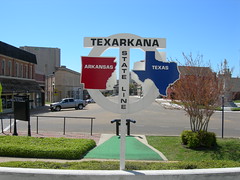
You’re Soliciting In Our State. Did We Say “OK?”

If you’re sending donation requests by email then you need approval from officials in states where they land.  Ditto if you send appeals through the Postal Service.  If you have online giving then there are a bunch of states that must say “OK” before your “Donate Now” button goes live.

These are all examples of solicitations under the Charity Registration laws.  Under these laws-which, sadly, differ in each state-your non-profit must have approval before it can conduct its solicitations.  In some states, like Florida, Arizona and Pennsylvania, there are criminal penalties with fines for non-compliance.  There are civil penalties in California, New York, Illinois and many others.  Under principles of fiduciary liability, your board members can be liable for your organization’s criminal or civil wrongdoings.

On top of all this the IRS has stepped in.  The new Form 990, which non-profits raising over $25,000 must file annually, asks two questions about your compliance with registration laws in states where you solicit.  The 990 is signed by an officer under penalty of perjury.

The definition of ’solicitation’ varies across the states.  In states like Florida, Georgia, Arizona, New Jersey and New York, the mere existence of a website that accepts donations triggers the registration requirement.  Add the likes of California, Colorado, Connecticut, Massachusetts, Oregon and Utah if you’re using email, U.S. mail or advertisements to induce their residents to your Donate Now button.

In every state, postal mail, meetings and events that include an appeal for gifts are registration-requiring solicitations.  It doesn’t matter how a state looks at your website if you’re dropping mail or meeting people there.

If your organization is small and most of your gifts come from just a few states (or maybe only one), here’s an enormous time-saving tip.  Put a disclaimer on your giving page, stating that you only accept gifts from certain states-and name them.  That way you don’t have to register in any other state; you’re no longer soliciting in those states.  Because I’m risk averse, I recommend going one step further if you use drop down menus.  In the state menu, only list the states you’re accepting gifts from.

The best way to get started is by following the adage ‘charity begins at home.’  Register with your home state.  I hope you see how this is different than incorporation.  It’s also different than registering a charitable gift annuity program if you have one, and if your state regulates gift annuities.  This is an additional layer of home-state law for you to comply with.

Next, register in states where you conduct the most solicitations.  If you’re strictly doing web based fundraising, with no inducements to your site, start with the most populous state (California) and see if it considers the existence of a website, without inducements, a solicitation.  California does not.  Continue in the same fashion with the second most populous state, then the third, etc.  The Census Bureau is an authoritative source for state population.

If you solicit in other ways, with or without a donation-accepting website, then query your own database.  Select those you solicit and pull their state of residence, listing the states in descending order by frequency of constituent.  The first state will be the one where you send the most solicitations.  Start there and work your way down.

Most states, but, sadly, not all, have exemptions based on charitable mission, gross revenue or in-state revenue.  You might be exempt in a good number of states.  Be aware that in some states exemptions have to be approved — you can’t just decide you’re exempt and move on.  They don’t make this easy.

Plan to do this over 12 to 18 months.  There’s no way you’ll be in full compliance immediately.  But you’ll be on your way with your most important states, in the right sequence, if you follow the plan I laid out above.

Eventually, you need to be in compliance to protect your non-profit from fines and other penalties, and your board members and officers from liability.

Tony Martignetti, Esq. has been supporting the fundraising needs of non-profits since 1997.  He is the author of Charity Registration: State-by-State Guidelines for Compliance and Managing Director of Martignetti Planned Giving Advisors, LLC.  His two websites are www.StateCharityRegistration.com andwww.mpgadv.com.  You’ll find Tony on LinkedIn, Twitter, and FacebookTo contact Tony, email him at tony@mpgadv.com.


9 Comments

Rita
Nov 13, 2009 at 1:55 pm

In your blog, you say “The new Form 990, which non-profits raising over $25,000 must file annually, asks two questions about your compliance with registration laws in states where you solicit.” Can you please identify those two questions (which section of the Form 990 are they in? ) I can’t seem to find two questions asking about registration…thanks! Great blog on a really important topic.


Tony Martignetti
Nov 13, 2009 at 5:48 pm

Hi, Rita,

Thanks for your question.

The Charity Registration questions are in Part VI, question 17 and Schedule G, question 3. Question 17 asks for states where the 990 is required to be filed. That’s a basic requirement of registration in nearly every state.

I hope this helps you, Tony


Rita
Nov 17, 2009 at 4:07 pm

Thanks! That’s exactly what I needed to know.
Rita


Kieran
Nov 19, 2009 at 2:31 pm

I have a question about third=party fundraising and solicitation. We benefit from a volunteer run event that happens in multiple states. Individuals sign-up for the event and raise funds mainly through email solicitation to their contacts – they are sending the emails, not our organization. Would this still be considered solicitation, and therefore require registration in the appropriate states?

thanks
Kieran


Makes me wonder about the implications for Facebook and Network for Good or Firstgiving.com. What if a supporter signs up as an evangelical for your cause and solicits their friends and family for donations to your cause. What if a nonprofit doesn’t have control over when and where these types of events take place; would the nonprofit still be held liable? I know that there is the “knowingly and willingly” language within many laws that can hold a nonprofit’s management and board liable from such things as private inurement, but does this also apply in fundraising? If the organization doesn’t know about it, does it still count? Further, this can be problematic for smaller (financially) nonprofits who do not have the professional accounting software nor the time/expertise to fill out forms for all 50 states and other U.S. territories out there. Perhaps the law can be amended that if you are registered within say 5% of all states that you are considered registered in all 50 or perhaps this breaks the interstate commerce clause of the Constitution? I assume it has already been challenged on physical direct mail grounds and lost because registration is still required, but I wonder about internet as a domain of activity. Perhaps there can be a one-stop-shop to register with each state. I know the 990 fulfills this obligation often, but does it fulfill this obligation throughout all 50 states? I would assume not, with the requirement to register. Further, some states might require different information from the next, this could be a place where federal laws can suggest that all requirements for each state are consistent with the next so that the nonprofit isn’t loosing valuable time and effort over the issue of compliance with each state’s registration requirements.


@Kieran I am in my final semseter of graduate school at George Mason University pursuing a Masters of Public Administration with a Concentration in Nonprofit Management.

The class I am enrolled in currently is “Governance, Law and Ethics for Nonprofits.” One of the assigned readings covers 3rd party fundraisers and much more. I would recommend you get a copy. It is really easy to read and the chapters are short and to the point. It will help illuminate a great deal about this issue.

Hopkins, Bruce (2004). Starting and Managing a Nonprofit Organization: A Legal Guide. 4th ed. New York: Johns Wiley & Sons.
You can get it at Amazon.com: http://bit.ly/5VoWUl

I hope this helps.


Beth Kanter
Nov 23, 2009 at 2:20 pm

Also wondering via Twitter?


Katya
Nov 24, 2009 at 11:16 am

Network for Good is registered in all states requiring it, so if you use our services to collect donations via our donor-advised fund, you do NOT need to register. We’ve long felt this is a big bonus of our service – we handle all of this for you!


Barbara Tillman
Dec 15, 2009 at 1:34 pm

I work with non profits fundraising sectors. And we always come across issues with donations across state lines. Currently, we use events.org to help use setup software for donations and they help us with issues as well. Look into them because they made my job alot easier.

http://www.online.donation.events.org/


Reply

Copyright © 2006-2009 Kivi’s Nonprofit Communications Blog All rights reserved. Based on Theme by Laptop Geek.