
On Thursday, August 19, I’m teaching a new webinar called “Using Metaphors and Themes to Get Your Messages Across.” It is part of our Get Creative series this month, and also part of the Ideas for Nonprofit Writers series of trainings I’m creating.
As part of my preparation, I interviewed Susan Strong (@susancstrong), the founder and executive director of the Metaphor Project, which helps mostly progressive causes frame their messages using well-understood cultural imagery and idioms – or as Susan says, to “speak American.”
Here’s part of my interview with Susan . . .
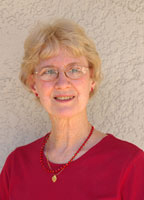
Susan Strong, Executive Director of the Metaphor Project
Q: What got you interested in starting a project about metaphors?
A: I was working in the peace and environmental communities in the 1990s and saw that many environmental groups were using the wrong kinds of metaphors or no metaphors at all. Instead they were using lots of scientific jargon or language mainstream Americans didn’t understand. So, I started the Metaphor Project in 1997 and put the first version of the website up in 2000. Today the website includes what we call the American Framing Steps, which is a step-by-step guide to speaking American. On the site we also provide an American Metaphor Categories list and a American Story Elements list.
Q: What do you mean when you say that nonprofits need to speak American? Is this about making your cause seem more patriotic? Are these causes speaking un-American now?
A: No, it’s simply about understanding American cultural narrative and tying in your message to that ideal American sense of identity that everyone already understands, instead of talking in the abstract.
For example, the idea of “playing by the rules” is a big part of American culture. That of course refers to sports, and there are lots of other widely understood sports metaphors like being a team player or leveling the playing field. Some nonprofits miss the point and think, “We can’t use that because we aren’t about sports.” But what these metaphors are really about is human endeavor and a common moral code of fairness that all Americans accept.
Other categories that are very much American, even if they don’t explicitly seem like it, are family (birth, death, mother, father), entertainment (dress rehearsal, soap opera), and nature (sowing seeds, man’s best friend).
Speaking American is also about speaking more simply, without jargon and big words. As the Heath brothers say in Made to Stick (Amazon link), simple does not mean simplistic. We want a message that is both simple and profound. You can speak American with complete integrity.
Q: What are some of your favorite uses of metaphors in the nonprofit sector?
I like much of what the environmental community is doing now; they have really come up to speed. I love terms like ecological footprint and carbon footprint. We also are seeing the phrase ecological overdraft, just announced by the Global Footprint Network this week. They are using a very familiar American banking metaphor to get their point across to the public.
Here’s another example of American metaphor success: Yes! Magazine used “America: The Remix” on its cover for the Spring 2010 issue about racial diversity. The magazine was focusing on diversity in society, but doing it by drawing on a very familiar entertainment metaphor.
Another clever example is the book called The She Spot: Why Women Are the Market for Changing the World — And How to Reach Them (Amazon link), which plays off sexual metaphors to talk about the economic and social power of women in society.
Q: What metaphors do you see nonprofits using that are overused or just don’t work?
A: I hear the phrase silos a lot to talk about people who are working in their own department or on their own issues and not collaborating. It works graphically, but not conceptually, because it’s not clear what should happen instead, what’s really going on, and why. After all, farmers need silos for very practical reasons, so why are they bad in this context? It’s not clear.
Cages might work better, because it’s easier to think about who put someone there and who can get them out. “Let them out so they can be free range.”
Q: What can nonprofit communicators do to start conversations in their organizations about using the best metaphors for their work?
A: Use the free resources on our website, starting with the American Framing Steps. Look at the American Metaphors Category list. Read through it and think about the possibilities. Next, think about your audience, what they think, and what language they use.
It’s also helpful to frame messages as solving a problem. A lot of people focus on telling a story with a villain, but problem solving needs to be there too. Americans want to solve problems the most.
The most fundamental thing to do on a metaphor search is to answer the question, “What is the thing we are doing like?” Is it like a game, or a medical intervention or a journey from here to there or something else?
A metaphor is a way of describing one thing in terms of another, and also a way of telling a story in a very condensed way. A good one can get attention, convey your story, and evoke the values you stand for in a very compact way—something we badly need in today’s competitive media environment. Our website also provides criteria to help you evaluate whether your metaphors will work for you and your audience.
Q: What can we expect next from The Metaphor Project?
A: I’m writing a book that summarizes our work. Until then, subscribe to our monthly updates at www.metaphorproject.org.
Want More?
Join Kivi for “Using Metaphors and Themes to Get Your Messages Across” live on Thursday. If that doesn’t fit your schedule, the recording of the webinar will be available to you for two weeks when you register a la carte. All-Access Pass holders will have access to the recording for three months.